The arrows are one of the first things people notice and want to understand. Four small triangles at the top of your chart, two on each side of the head. They’re not decorative. They point to something real.
Your chart is like an onion. Type, Strategy, Authority, Gates, Channels… that’s the architecture for how you interact with the outside world. The Human Design Arrows are the inner architecture. How your brain processes information, the kind of environment that supports your cognition, whether your perspective is narrow or wide, whether your mind operates strategically or receptively. This is what’s happening on the inside.
And there are layers underneath the arrows too. This is the entry point, not the bottom of the rabbit hole. But when you try to research it, the information is scattered, inconsistent, and often lifted straight from source material without much translation into plain language. This is all 16 configurations laid out clearly, in one place, with what they actually look like in real life. Learn the architecture. Just don’t get so bogged down in the definitions that you forget to live your experience.
What Human Design Arrows Actually Are
The four arrows on your Human Design Chart are called Variables. Each arrow points either left or right, and the combination creates 16 possible configurations. Left and right do not mean “good” or “bad”. They actually describe two fundamentally different ways of how you operate internally.
Left is active, focused, strategic. It processes by narrowing in. It does its best work when it has a clear target to aim at.
Right is passive, receptive, peripheral. It processes by taking everything in. It does its best work when there’s no fixed agenda, no pressure to produce something specific.
Here’s a quick orientation for each arrow position.
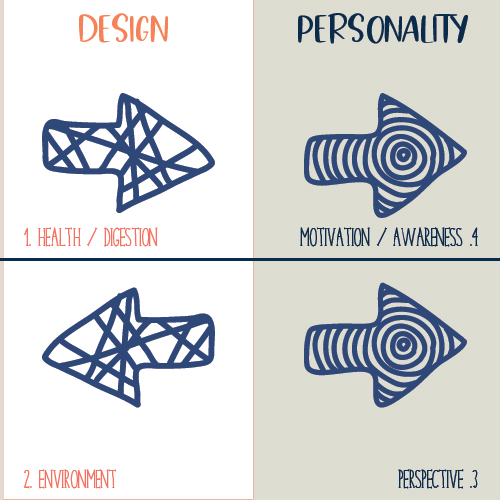
Arrow 1, the Design Brain: How your brain is wired to process. Left brains are active processors. Right brains are receptive, absorptive.
Arrow 2, the Design Environment: The type of environment that supports your cognition. Left environments are active, stimulating, busy. Right environments are relaxed, spacious, low-pressure.
Arrow 3, the Personality Perspective: How you see. Left perspective is focused, specific, narrow-angle. Right perspective is wide, peripheral, taking in the whole scene.
Arrow 4, the Personality Mind: How your mind works. Left minds are strategic and goal-oriented. Right minds are receptive, open, and relationship-oriented.
The combination of these four creates your cognitive architecture. Each of the 16 configurations has an animal name. Not as a cute label, but as a way to capture the quality of how that specific configuration moves through the world.
How Human Design Arrows Actually Work: The 16 Configurations
The configurations move from all-Left (the Shark) to all-Right (the Alf). As you move along that spectrum, the energy shifts from strategic and focused to receptive and flowing. Neither end is better. They’re different operating systems serving different purposes.
Focused Mind
These four configurations share a Left (strategic) mind. The differences show up in how the brain, environment, and perspective interact with that focused mental processing.
:: The Shark :: Always Active, Always Working
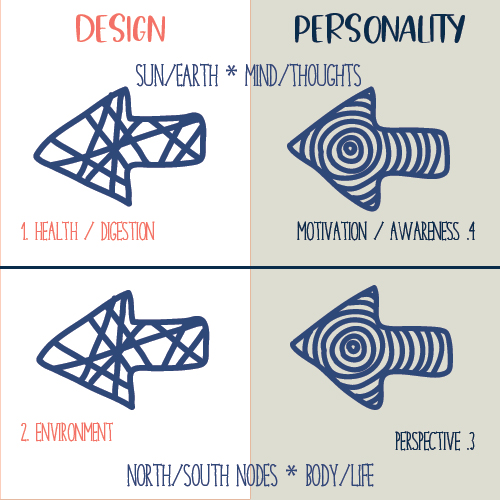
All four arrows point left. This is as focused as it gets.
The Shark doesn’t coast. This configuration is built for sustained concentration, one target at a time, with the stamina to stay locked on it. There’s an enormous capacity for deep work here, and a perfectionism that comes with it. The fear of missing the mark keeps the engine running.
Focus is everything for this configuration. Not scattered effort across ten projects. One clear objective. When that focus is dialed in and aligned with what’s actually correct, the staying power is remarkable. When it’s misaligned, the pressure to perform doesn’t let up. It just burns without direction.
:: The Lion :: Awake, Relaxed
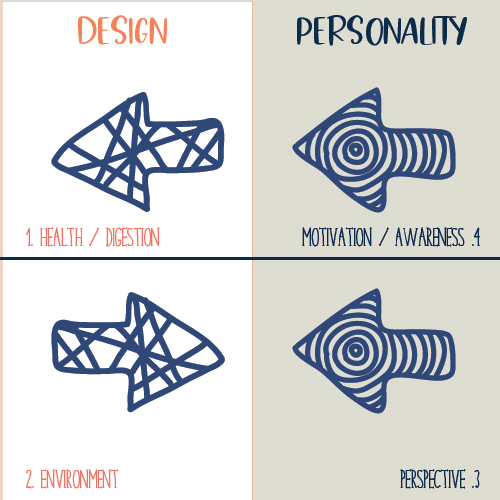
Left brain, right environment, left perspective, left mind.
The Lion has the same strategic, focused mind as the Shark, but the body and environment need space. This configuration does its best thinking when it’s not under pressure.
Relaxation isn’t laziness here. It’s the mechanism that allows focus to sharpen. If you find yourself in constant high-pressure environments with no room to breathe, notice what happens to your clarity. When there’s spaciousness, the focus arrives on its own. When there isn’t, the mind scrambles. The environment matters more than the effort.
There’s an observer quality to this one. Like the Buddha in the center, everything orbiting around. When the Lion is too busy, it can’t see. When it’s settled, it sees exactly what comes next.
:: The Dolphin :: Meditative Activity

Right brain, left environment, left perspective, left mind.
Here’s something interesting about this configuration. The brain is the only right arrow, which means it’s receptive. It absorbs. But everything else is active and focused. The resolution is movement. Specifically, meditative movement.
The Dolphin’s brain processes best when the body is doing something repetitive, something that doesn’t require mental problem-solving. Gardening, yoga, cleaning, playing an instrument. The hands stay busy. The brain gets quiet. That’s where the processing actually happens. Being active takes the pressure off the brain so it doesn’t have to intellectualize. It can simply receive while the body does.
:: The Panda :: Flow

Right brain, right environment, left perspective, left mind.
The Panda sits in a unique tension. The mind is strategic and focused, but the body wants to be in flow. The personality faces one direction, the design faces another, and the whole system can feel like it’s being pulled apart.
The resolution isn’t choosing a side. It’s bringing mental awareness into the body. The mind might insist that more structure is the answer. The body knows otherwise. It’s in the stillness and spaciousness where the mind actually settles. Practices that connect body and mind, like meditation or gentle movement, tend to be what brings this configuration into alignment. The body has its own intelligence here. Learning to listen to it is the experiment.
Universal Mind
These four share a Right (peripheral) perspective. The mind sees wide, takes everything in. The differences show up in how the brain, environment, and mind interact with that panoramic view.
:: The Dog :: Always Active, Always Working
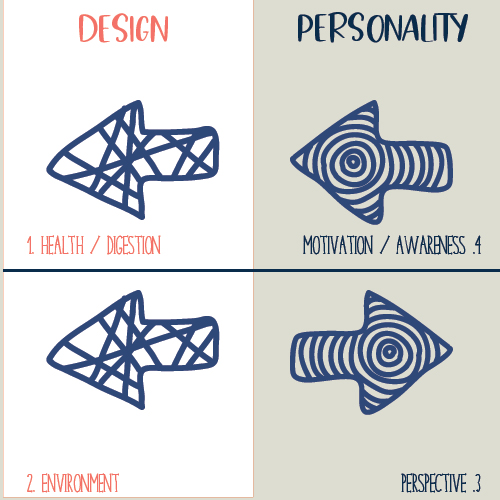
Left brain, left environment, right perspective, left mind.
The Dog sees things other people don’t. A wide-angle view paired with a strategic mind creates someone who picks up patterns and connections that are invisible to most. The challenge is articulating what you see in a way that lands.
This configuration can handle a busy, active environment. Not necessarily constant physical activity, but access to kinetic energy. The buzz of a marketplace, the hum of a coffee shop. When the environment goes flat or unstimulating, the view goes flat too. If you find yourself somewhere that makes you sleepy or uninterested, that’s information about the environment, not about you.
:: The Cat :: Awake, Relaxed
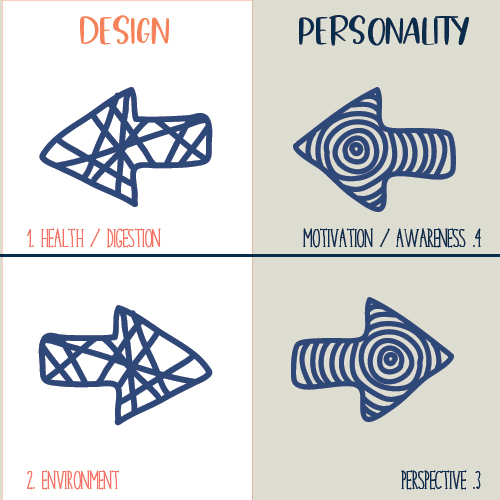
Left brain, right environment, right perspective, left mind.
The Cat has an active brain and a strategic mind, but the life itself is meant to be peripheral and flowing. This is where the mind can become a trap. It might push toward structure, planning, constant forward motion. But the body and life don’t actually work that way in this configuration.
Notice what happens when you allow things to flow rather than forcing them into a plan. The mind is a passenger here. It sees everything. It strategizes beautifully. But it doesn’t get to steer. Letting the mind rule the decisions tends to pull this configuration out of alignment. The flow is the path, not the plan.
:: The Horse :: Meditative Activity
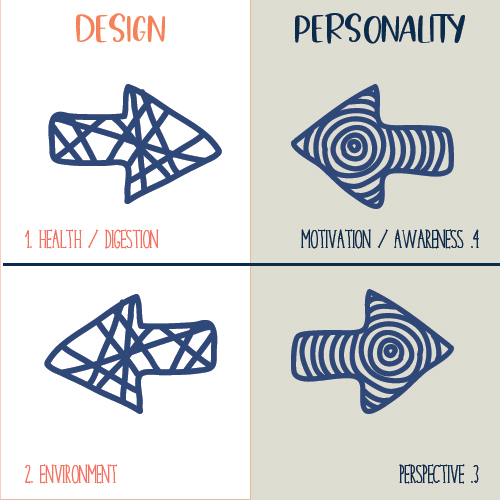
Right brain, left environment, right perspective, left mind.
The Horse’s brain is passive. It takes in without trying to do anything with what it receives. That’s the design.
Busy fingers, quiet mind. That phrase captures this configuration. Meditative activity, making art, knitting, cooking, running, creates the conditions for the passive brain to absorb and process. The activity doesn’t need to be intellectual. It just needs to involve movement and repetition. From that still, active place, the wide perspective clears and the strategic mind can articulate what’s been taken in. Whatever the activity is, joy matters. Pick what you actually enjoy.
:: The Rabbit :: Flow
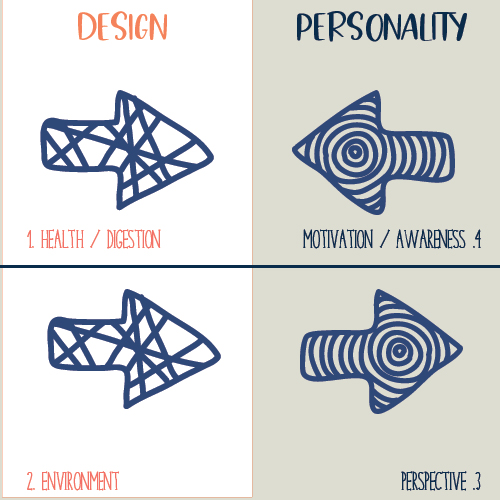
Right brain, right environment, right perspective, left mind.
Almost entirely right, except for that strategic left mind sitting at position four. Everything else is receptive, absorptive, flowing. And that one strategic arrow can create real internal pressure if it’s allowed to run the show.
Relationships are key for this configuration. The Rabbit carries a depth of awareness from everything it’s absorbed over a lifetime, and the right relationships draw it out. Not by force. By recognition. Someone asks the right question, and what comes through has a precision that surprises even the Rabbit. The thing to remember is that being you, in the right environment, around the right people, is enough. The gifts surface when they’re needed, not when they’re forced.
Relationship Mind
These four share a Right (receptive) mind. The gifts living in this mind don’t emerge on their own. They get drawn out through relationship, through the right people at the right moments.
:: The Bee :: Always Active, Always Working
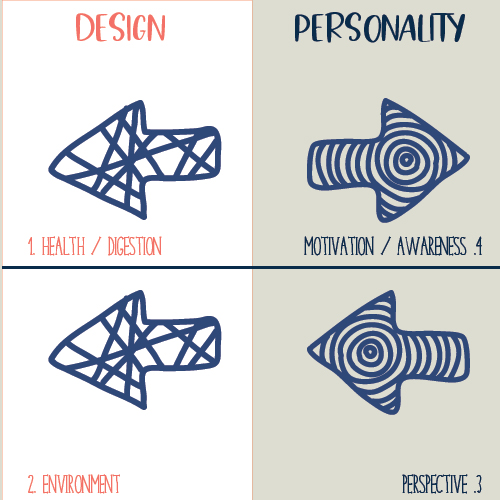
Left brain, left environment, left perspective, right mind.
Three left arrows, one right. Everything about the outer structure is strategic, directed, active. But the mind is open, receptive, picking up things no one else sees.
The catch is that what the Bee’s mind absorbs doesn’t necessarily come out voluntarily. The right relationships surface it. Someone draws it out, and what emerges is surprisingly specific and valuable. Staying active and keeping the environment stimulating feeds that open mind with fresh material. The fulfillment comes when the right person asks the right question and something you didn’t even know you were carrying finds its way into words.
:: The Owl :: Awake, Relaxed
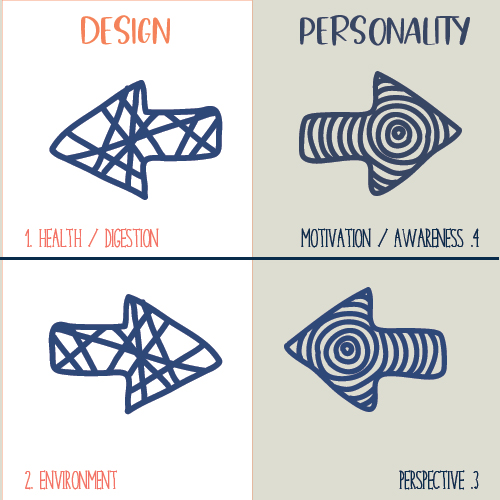
Left brain, right environment, left perspective, right mind.
The Owl absorbs deeply. An active brain with a focused perspective means it takes in specific, detailed information about the people and patterns around it. But the environment needs to be relaxed for any of that to land properly. Pressure shuts it down.
There’s a teaching quality to this configuration. The fulfillment comes through sharing what’s been acquired, but only when it’s requested. The Owl doesn’t broadcast. It reflects. Being alone for extended periods doesn’t serve this architecture. The gifts only activate in relationship, when someone is there to receive what the Owl has been quietly gathering.
:: The Camel :: Meditative Activity
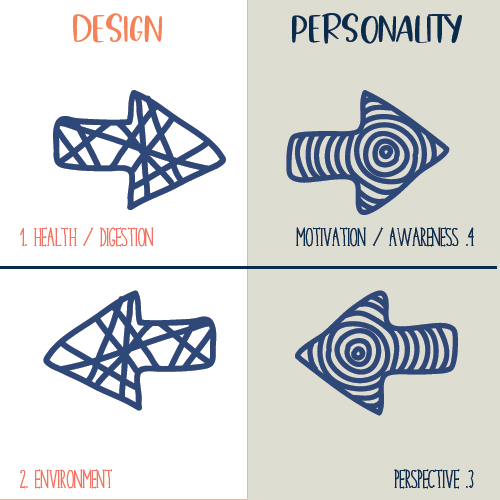
Right brain, left environment, left perspective, right mind.
Passive brain, receptive mind, dropped into an active and focused life. This is not a strategic being. Not even a little. The more this configuration tries to think its way through problems, the more friction it creates.
The activity itself doesn’t matter much. What matters is that the body is moving and doing, giving the brain and mind space to process in the background. Repetitive, meditative activities allow everything that’s been absorbed to integrate quietly. Playing an instrument, drawing, running, gardening. And through the right relationships, all of that absorbed wisdom gets drawn out in ways the Camel might not even realize it possesses.
:: The Sheep :: Flow

Right brain, right environment, left perspective, right mind.
Heavily right-oriented. Passive brain, relaxed environment, receptive mind. The one left arrow, a focused perspective, gives this configuration a narrow view that allows the receptive nature more space to take in deeply rather than broadly.
Right-oriented configurations operate on a different premise than left ones. Where left is strategy and focus, right is flow and synchronicity. In a culture that treats strategic thinking as the default mode of success, this can feel like something is wrong. Nothing is wrong. It’s a different frequency. The Sheep may have visions or insights that no one else shares. Being selective about who receives them matters.
No-Mindedness
These four share a Right perspective and a Right mind. The internal system is almost entirely receptive. What gets taken in is vast, but it doesn’t get processed strategically. It gets stored, integrated, and drawn out by others when the timing is right.
:: The Bear :: Always Active, Always Working
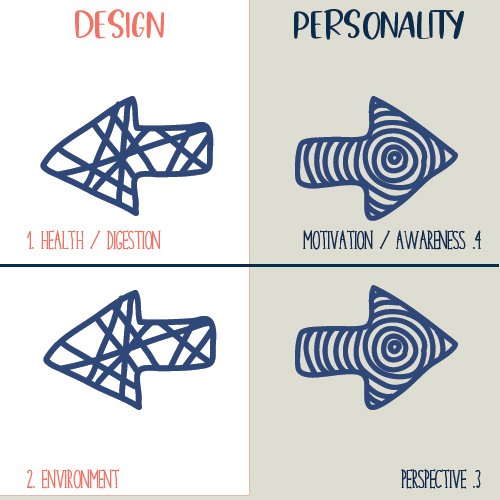
Left brain, left environment, right perspective, right mind.
From the outside, the Bear looks like a strategic, active personality. Left brain, active environment, always moving. But internally, the perspective is wide and the mind is quiet. The Bear absorbs and stores information without necessarily knowing it’s doing so. A storehouse.
This configuration does well in environments that create productive pressure. Not stress, but a sense of being needed, being drawn upon. The right people at the right time pull out everything that’s been quietly accumulated. The Bear doesn’t always know what it’s carrying until someone asks the right question.
:: The Octopus :: Awake, Relaxed

Left brain, right environment, right perspective, right mind.
One left arrow: the brain. Everything else is right. The brain is active, processing, engaged. But the life around it is meant to be relaxed, receptive, without pressure to produce on demand.
This configuration does best when it’s simply being. Not performing. Not hustling. Existing, taking it all in, and allowing what’s been absorbed to be shared when the moment calls for it. It’s not about what you do that defines the contribution. It’s about how you take in information and what happens when you share it with others.
:: The Cow :: Meditative Activity
Right brain, left environment, right perspective, right mind.
Right brain, right mind, wide perspective, but an active environment. The Cow’s ideal environment brings activity out naturally. Busy hands doing things that bring joy, though the specific activity doesn’t matter. The activity is what keeps the mind at ease and prevents internal pressure from building.
When this configuration is in the right environment, it sees what it’s meant to see and ends up around the people who benefit from its gifts. Those gifts live in a lifetime of accumulated experience, absorbed without any strategic plan for what to do with it. The fruits show up when the conditions are right.
:: Alf :: Flow

All four arrows point right. This is as receptive as it gets.
The Alf is the opposite of the Shark. Where the Shark narrows in on one target with relentless focus, the Alf opens to everything without agenda. No fixed strategy. No master plan. Life unfolds, and the Alf takes it all in.
This can feel disorienting in a world that rewards strategy and forward motion. The structuring that actually serves this configuration isn’t a business plan or a five-year goal. It’s following what feels correct, moment to moment. The depth of awareness that accumulates over time becomes an enormous resource for others. Not through deliberate teaching, but through the quiet, transformative effect of being around someone who has absorbed that much life without filtering any of it out.
Common Misunderstandings About Human Design Arrows
There’s a pattern with how this information gets treated online, and it’s worth naming.
People take the arrows and turn them into another set of rules. That’s the opposite of what they’re for.
You’ll find content that says you need to master your Strategy and Authority for years before you’re “allowed” to look at Variable. That’s gatekeeping dressed up as guidance. If you need to see the whole picture to understand any of it, see the whole picture. You’re the one living this design. You get to decide when you’re ready.
You’ll find content that turns the arrows into rigid lifestyle prescriptions. Especially around diet and environment. Someone reads that their environment arrow points right and suddenly they’re restructuring their entire life around it. The arrows aren’t a rulebook. They’re a lens. Hold it loosely.
You’ll find content that frames left as masculine and right as feminine. You don’t have to do that. It flattens something nuanced into a binary that doesn’t add much.
You’ll find content that reduces Variable to a manifestation formula. Specific manifestor, nonspecific manifestor. That framing caught on because it’s catchy, but it’s one narrow application that got repeated until it became the whole conversation. Your Variable is not the only way you align with your desired reality. It’s not even close.
And you’ll find content that treats left configurations as the default, the productive ones, the ones that “work” in the real world. They’re not. Left and right are different operating systems. Neither is superior.
The through-line in all of this is the same: people keep turning a tool for self-understanding into another external authority. That’s the thing to watch for. Not whether your arrows point left or right, but whether you’re using them to know yourself better or handing your power to someone else’s interpretation.
Your own experience is the only thing that confirms or adjusts the picture. That’s been true for every layer of this system. The arrows are no different.
Your Human Design Arrows Are the Architecture Underneath Everything Else
Most people start with Type, Strategy, and Authority. For good reason. Those are the foundation of the system. But the Human Design Arrows are what sits underneath that foundation. The cognitive wiring that shapes how you take in information, what environment supports your processing, and how your mind operates when there’s no external pressure telling it what to do.
The 16 configurations aren’t a personality test. They’re a map of internal mechanics. And like everything in this system, the map is only useful if you test it against your own lived experience. Notice what resonates. Notice what doesn’t. Pay attention to what shifts when you’re in an environment that matches your design versus one that doesn’t. Notice what happens when your mind is allowed to do what it naturally does versus being pushed into a mode that creates friction.
Nobody else can tell you how your arrows play out in your life. That part is yours to discover. You already have the architecture. This just gives you words for it.
Go Deeper
If this way of seeing your Human Design Arrows resonates, the HD.OS® Learn Your Human Design Bundle is the natural next place to explore. The Book, the Deck, the Crash Course, and the Poster work together as a system: pattern recognition across all four, each one reinforcing what the others surface.
- The Printed Book: the whole picture, laid out in plain language.
- The Printed Deck: seeds to sit with. Learn through play, not memorization.
- The Digital Crash Course: the architecture explained, grounded in how it actually works. Understood in one weekend.
- The Printed Poster: the full chart map in one place, so you can see how it all connects to the traditional chakra configuration.
Not a rule-book. A lens you can actually use.


