You pulled up your chart. Maybe a friend sent you a link, maybe you fell down a rabbit hole at midnight, maybe someone mentioned it in a podcast and something in you went… “wait, tell me more?!”
Now you’re staring at a geometric figure full of shapes, numbers, and colored-in sections and you have no idea what you’re looking at.
That’s exactly where this guide starts.
Human Design is one of those things that sounds complicated on the surface and clicks into place the moment someone explains it in plain language. That’s what this is. No jargon for jargon’s sake. No rules to follow. No guru standing between you and your own chart.
Just the pattern, laid out clearly, so you can start to recognize yourself in it.
Human Design in Plain Language
Here’s the simplest way to say it: Human Design is an energetic Operating System (OS).
Not a personality test. Not a spiritual belief system. Not something you have to believe in for it to be useful. It’s more like a map of how you’re wired. The architecture underneath how you think, how you make decisions, how you interact with other people, and how you move through the world.
Think of it like this. Your computer runs on code. You don’t see the code when you’re using the computer. You just interact with the interface. But underneath everything, there’s a specific operating system that determines how the machine functions, what it’s built for, and how it processes information. Human Design works the same way. It’s the code running underneath your experience. It encodes your DNA, it shapes your energy, and it describes the specific way you are built to interface with the world around you.
It’s not woo. It’s pattern recognition.
And here’s the thing about patterns: you don’t have to believe in them for them to show up. You just have to look.
What can it actually help you understand? Your strengths and how you naturally operate. Your blind spots, not as flaws, but as design features that make sense once you see them. How you relate to other people and why certain dynamics feel draining while others feel effortless. How to make decisions that are actually aligned with how you’re built, instead of how you were told to be.
It brings you back to yourself. That’s the whole point. Not to hand you a new identity, not to give you a system to follow. To give you words for what you already know.
The History of Human Design
Human Design was originated by a man named Alan Robert Krakower, who later went by the name Ra Uru Hu. In January 1987, while on the island of Ibiza, he described receiving what he called a download: a transmission of information over the course of eight days that formed the foundation of the entire system. The original material became a book called The Human Design System, published in 1992.
Krakower’s background before this was in advertising and magazine publishing. He was a marketing person by trade. Which, if you spend any time in the Human Design space today, starts to explain a few things about how it eventually got packaged and sold to the world.
The system itself draws from several existing frameworks and synthesizes them into something new. Astrology provides the foundation: your birth date, time, and location are used to calculate your chart, just like an astrological chart. The I Ching, the ancient Chinese system of 64 hexagrams, maps onto the chart through what Human Design calls Gates. The Hindu chakra system informed the nine Centers in the chart, though they were adapted and reorganized from the original seven. The Kabbalistic Tree of Life provides some of the structural connective tissue. And elements of modern physics, particularly around neutrinos, are part of the original theoretical framework.
For the skeptics reading this: you don’t have to accept the metaphysics of how it was received to find the system useful. The Gates are themes. The Centers describe energy patterns. The Types describe how people tend to move through the world. Whether those descriptions emerged from a mystical download or from careful pattern observation over decades, what matters is whether the patterns hold up when you look at your own life.
Most people find that they do.
One thing worth knowing: not everything associated with Human Design today was part of the original transmission. Strategy and Authority, which you’ll hear about constantly as the entry point for beginners, were developed as teaching tools. They’re useful, and this article will cover them. But they’re one layer of the system, not the whole thing. The original core is richer and more nuanced than any single rule will ever capture.
How a Human Design Chart Is Calculated
Your chart is calculated using your birth date, birth location, and birth time.
The birth time question comes up a lot, and here’s the honest answer: exact time matters most if you want to understand the inner architecture of your chart, specifically the arrows in the corners of the chart that describe your cognitive style and how you take in information. For the foundational layers, including your Type, your Centers, your Gates, and your Profile, even an approximate birth time will usually get you close enough.
If you genuinely don’t know your birth time, start by narrowing it down to a window. Were you born in the early morning, between midnight and six? Morning to noon? Afternoon to evening? Evening to midnight? The chart can shift significantly throughout the day, so having even a rough window helps. From there, you can start to cross-reference: does the way your chart describes you actually land? Does it feel true? Use that as your calibration tool, because ultimately, you know yourself better than any birth certificate does.
What is a chart, exactly? The chart, sometimes called a BodyGraph (though that term is trademarked, so you’ll see it referred to different ways), is a geometric figure that maps your energy system. Think of it as a visual diagram of your inner architecture.
The foundation of the chart connects to the zodiac wheel, specifically to the placement of the planets at two moments in time: the moment of your birth, and approximately 88 days before your birth. Those two snapshots of planetary placement activate what Human Design calls Gates. Gates are positions along the chart that correspond to the 64 hexagrams of the I Ching. Each Gate carries a specific theme, a quality of energy, a way of seeing or moving through the world.
When you have two Gates that sit on opposite ends of the same channel and both are activated in your chart, they form a Channel. A defined Channel lights up both of the Centers it connects, turning those Centers from white to colored. Defined Centers are consistent. They represent energy you have reliable access to, energy you broadcast out, energy that’s genuinely yours. Undefined Centers are white. They’re places where you take in energy from the people and environments around you, where you amplify what’s moving through the room. That inconsistency is part of how they work. There’s real wisdom that develops there over time.
The first time you open your chart, here’s what to look at: what’s colored in, and what isn’t. The colored-in Centers are where your consistent energy lives. The white spaces are where you’re taking in and amplifying the world around you.
The Five Human Design Types
Type is the outermost layer of the onion. It’s the broadest description of your energy mechanics, how you’re built to operate in the world, and it’s usually the first place people start.
There are technically five Types, though many teachers describe it as four with one subdivision. A brief orientation to each:
Generators are the builders. You have a defined Sacral Center, which means you’re one of the only Types built with consistent, renewable life force energy. You don’t just have energy. You generate it. And there’s a warmth to how that energy moves in the world that people feel without being able to name it. You’re here to do work that genuinely lights you up. Satisfaction is your signal. When it’s there, keep going. [LINK: Full Generator article]
Manifesting Generators are a hybrid Type. You have the defined Sacral of a Generator and a motor connected directly to your Throat. Two operating systems, one body. They don’t always pull in the same direction. That tension is part of how you’re wired. You move fast, you’re multi-passionate, and pivoting isn’t quitting. It’s how you’re actually built to operate. [LINK: Full Manifesting Generator article]
Projectors don’t have a defined Sacral. Without that motor running constantly in the background, what opens up in that space is perceptiveness. You read people. You read rooms. You see what others can’t see. That’s the gift. Offer freely. Release the grip on how it has to land. [LINK: Full Projector article]
Manifestors are the initiators. You have at least one motor center connected directly to your Throat, which means you can move from your own internal impulse without waiting for an external cue. Your aura is closed and repelling by nature. When you move without saying anything, people feel your impact before they understand it. Informing isn’t asking permission. It’s just a heads up. And it changes how smoothly everything moves. [LINK: Full Manifestor article]
Reflectors have no defined Centers at all. Every Center is open, which means you’re completely open to feeling, sensing, and sampling what’s around you without a fixed filter distorting what comes in. You’re not broken. You’re built differently, on purpose. Your environment matters more than almost anything else. And the 28-day lunar cycle is real for you in a way it isn’t for other Types. [LINK: Full Reflector article]
One thing to hold loosely: your Type is not your personality. It’s not a box, and it’s not a destiny. It describes your energy mechanics, the specific way you are built to operate. Two people with the same Type can look completely different in real life. The Type is the container. What you do with it is yours.
Strategy and Authority: The Two Things Worth Learning First
Strategy and Authority. You’ll hear these two terms constantly in Human Design spaces, and there’s a reason they get positioned as the entry point. They’re practical. They’re applicable. And they’re where most people start to see the system actually show up in their lives.
That said: don’t make them a rule book.
This is the most common mistake people make with Human Design. They read about their Strategy, they read about their Authority, and suddenly they’re policing themselves. Am I doing this right? Did I follow my Strategy? Is this my Authority or is it my mind? That’s not how this works. That’s your ego turning a map into a religion.
The better approach is to treat this information as something you tuck into your awareness and then go live your life. Not something you perform. Something you observe.
Strategy is the specific way each Type moves through the world most effectively. It’s less about what you do and more about the quality of how you engage. [LINK: Full Strategy article]
Authority is your inner decision-making system. Every person has one, and they’re different. Some people make their best decisions by following a gut response in the moment. Some need to sleep on things and see how they feel in the morning. Some need to talk it out and listen to what comes out of their mouth. Some need time and space to observe before they know. [LINK: Full Authority article]
What does it actually look like to work with Strategy and Authority in real life? It looks like paying attention. It looks like noticing when something feels genuinely aligned versus when you’re pushing. It looks like catching, in retrospect at first and eventually in the moment, when you made a decision from your true knowing versus from pressure or fear or someone else’s expectations.
Here’s a real example. A Projector waits for recognition and invitation. That doesn’t mean sitting in a room doing nothing hoping someone discovers them. It means putting genuine work into the world, being visible, and then paying attention to which opportunities come with a real sense of being seen versus which ones you’re forcing yourself into. The difference is palpable once you start watching for it.
What happens when you ignore it? Nothing catastrophic. You just get feedback. The Generator who keeps initiating instead of responding hits walls and frustration. The Projector who pushes for recognition without waiting for genuine invitation ends up bitter and exhausted. The feedback is built into the design. You can learn from it or not. That’s always your choice.
The goal is not to follow these concepts perfectly. The goal is to use them as a feedback loop, a way of building self-awareness about how you move through the world.
The Nine Centers: What’s Defined, What’s Open, and What That Means
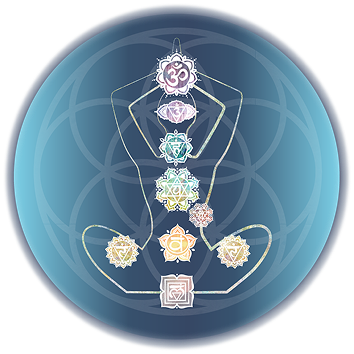
The nine Centers in the Human Design chart evolved from the seven chakras of the Hindu system, reorganized and expanded to fit the architecture of the BodyGraph. Each Center governs a different aspect of how you function.
Defined Centers (colored in) represent consistent, reliable energy. This is what you broadcast. It’s stable. Other people feel it when they’re around you. It’s also where you develop your deepest knowing, where you learn consistently over time and build genuine mastery. That said, defined Centers can be conditioned too. It just shows up differently. Because the energy there is fixed and consistent, the patterns you’ve been running tend to feel like just how you are. They’re harder to see and honestly harder to change.
Undefined Centers (white) are where you take in energy from the people and environments around you. What you experience there shifts depending on who you’re with and what environment you’re in. That inconsistency is part of how they work. There’s real wisdom that develops in those spaces over time. And conditioning shows up here too, but it tends to be easier to release once you recognize it, because it came from outside you in the first place.
Here’s what conditioning actually means. From birth, especially those early years from zero to seven, you absorb signals from your family, your community, your culture, your school. You learn what’s acceptable, what gets you love, what keeps you safe. The point isn’t to throw all of that out. Some of it is genuinely useful. The question worth asking is simpler: is this belief helping you grow, or is it holding you back? Keep what serves you. Release what doesn’t. The goal isn’t to be completely deconditioned. It’s to navigate your life with awareness.
Your open Centers are where you’re most susceptible to taking on other people’s energy and mistaking it for your own. Someone with an undefined Emotional Center might spend their whole life managing feelings that aren’t theirs. Someone with an undefined Sacral might override their own limits because they’re amplifying the energy of the Generators around them, mistaking it for their own drive, and burning themselves out in the process.
Understanding what’s defined and what’s open in your chart doesn’t give you an excuse. It gives you a lens. You stop taking the signals from your open Centers as absolute truth and start asking: is this mine, or am I picking this up from my environment?
What Is a Profile in Human Design?
If Type is the outer layer of the onion, Profile is the layer just underneath. It describes your life role, the specific way you’re here to move through the world and relate to other people.
Profile comes from the I Ching hexagram lines. Each hexagram has six lines, numbered one through six. Your Profile is a combination of two of those lines, one from your conscious side and one from your unconscious side, which is why it shows up as two numbers, like 2/4 or 5/1 or 3/5.
A quick map of the six lines:
Line 1 is the Investigator, connected to the root chakra. And that tracks. Root energy is about foundation, stability, needing solid ground before you can move. Research isn’t optional for Line 1s. They go deep before they feel ready. They need to understand the whole picture first. If you have a Line 1, you probably already know this about yourself.
Line 2 is the Hermit, connected to the sacral chakra, the center of self and other, of creativity and relationship. Line 2s have natural gifts they often can’t see in themselves. They need alone time to come back to their own energy. And the projection tends to be intimate, people close to them recognizing something in them before they recognize it in themselves. They’ll be called out of their hermit cave when the right people see what’s there.
Line 3 is the Experimenter, connected to the third chakra. And the third chakra is all about digestion. That’s exactly how Line 3s learn. Not through thinking about it. Through doing it, processing the experience, figuring out what works through what doesn’t. Their life is research. Every failed experiment is data.
Line 4 is the Opportunist, connected to the heart chakra. Their opportunities are literally heart-led. They come through genuine connection and relationship, usually a small circle, three to five people who matter, not cold outreach into the world. Line 4s don’t need a wide network. They need the right one.
Line 5 is the Heretic, connected to the throat chakra. The throat is where energy becomes communication, where something internal gets broadcast outward. Line 5s carry a wide projection field. Their voice reaches further than they realize, and people fill in the gaps with whatever they need to see, hero or villain depending on the moment. The channel goes both ways. They broadcast, and others project back.
Line 6 is the Role Model, connected to the third eye chakra. The third eye sees the bigger picture, the bird’s eye view. Which is why the three phases of a Line 6 life make sense. The first thirty years are experimental, like a Line 3. Then a retreat onto the roof to observe, to gain perspective. Then a return to the world as a living example of what’s possible, someone who has actually seen it from above and come back down to live it.
Why do people identify so strongly with their Profile? Because it describes something real about how you move through the world. Not who you are, but how you operate, how you learn, how you relate. Once you see it, it’s hard to unsee.
It’s not a box. It’s a lens. Hold it that way.
Human Design vs Astrology, Myers-Briggs, and the Enneagram
Human Design vs. Astrology
Astrology is the weather forecast. It tells you what’s moving through the atmosphere, what energies are in play right now, what the collective is navigating. It has transits that shift daily, seasonally, yearly. It describes what’s happening around you and what’s moving through you.
Human Design is the map of your terrain. It shows you how you are specifically built to navigate whatever weather shows up. It doesn’t change with the seasons. It’s fixed to the moment of your birth. It tells you something about your inner architecture that astrology can touch but doesn’t fully describe.
They’re complementary. Astrology tells you about the weather. Human Design tells you about your specific landscape. Both together give you a much fuller picture than either one alone.
Human Design vs. Myers-Briggs, Enneagram, and Other Systems
Every system has something different to offer, and they’re all doing something similar: giving you language for patterns you’re already living. Myers-Briggs describes cognitive and behavioral tendencies. The Enneagram maps core motivations and fears. Human Design goes deeper into the energetic architecture, the specific way your energy operates in relationship to other people and to the world.
None of them are the final word on who you are. They’re all just lenses.
Does your Human Design change over time?
No. Your chart is calculated from the moment of your birth, and that doesn’t change. You might experience life differently as you grow and do inner work, but the underlying architecture stays the same. Just like you can’t change being a Scorpio Sun or having a Pisces Rising, you can’t change your Type or your defined Centers. What changes is how well you understand and work with what’s already there.
Does Human Design Actually Work?
Honestly? It’s not scientifically proven. There are no double-blind studies on whether Projectors are better off waiting for invitations, or whether Generators make better decisions from Sacral response. That research doesn’t exist.
What does exist is pattern recognition. And the patterns are consistent enough that millions of people across cultures and backgrounds keep coming back to this system because something in it holds up when they look at their own lives.
It’s not a belief system either. It doesn’t ask you to believe anything. It asks you to pay attention. Try something. See what happens. If the patterns land, use them. If they don’t, leave them. No dogma required.
For the skeptics: you don’t have to be convinced. You just have to be willing to observe. Look at your chart. Look at what’s defined, what’s open, what your Profile says, how your Type is described. Then look at your actual life. Not through the lens of “is this true?” but through the lens of “does this pattern show up?”
Most people find that it does.
The healthiest way to use Human Design is as a feedback tool. Not as an oracle. Not as a set of rules that tells you what to do. As a mirror that shows you patterns you might not have been able to see before. And then as a starting point for asking: given how I’m actually wired, what would it look like to stop working against myself?
Where people go wrong is when they turn it into a religion. When it becomes dogma. When they read something about their Type or their Authority and take it so literally that they stop thinking for themselves. That’s the opposite of what this is for.
Human Design is meant to return authority to you. Not to create a new external authority you have to obey.
Do You Need a Human Design Reader?
Here’s something worth saying plainly.
The Human Design space has a middleman problem. A significant portion of the industry is built around paid readings, often expensive ones, where someone else interprets your chart for you and tells you who you are. Some of those readings are genuinely useful. Some people find them helpful as a starting point.
If I’m being honest, this isn’t a popular opinion. But most people in this space will never say it out loud. A reader will never know you the way you know yourself. They’ll have their own biases, their own interpretations, their own framework for what things mean. You’ll walk away with their version of your chart, filtered through their lens. And then what? You need them again next time you have a question. Getting a reading can be helpful. Learning to read your own chart is a whole other level.
It’s a bit like going to confession. Even at eight years old, something about having a third party stand between you and your own inner knowing felt off. Why do you need someone else to interpret your relationship with yourself?
You don’t.
Human Design is not that complicated. The system has been made to seem complicated because complexity creates dependency, and dependency is a business model.
What it actually is: a language. Like astrology, like the Enneagram, like any symbolic system, it has a vocabulary and a set of concepts to learn. And once you learn the vocabulary, you can read your own chart. You can sit with your own Gates and ask what those themes mean in your life. You can look at your open Centers and recognize the places where you’ve been absorbing other people’s energy. You can use this information to understand yourself, by yourself, without anyone standing between you and that understanding.
The goal has always been to teach you to fish, not to give you a fish. The information should live inside you, not stay locked behind someone else’s expertise. You are your own best reader. You always have been.
That’s the whole point of building a community rather than a reading practice. Because when you’re in a room with other people who are all learning to read their own charts, you learn from each other. Someone says something about their experience and it unlocks something in you. That’s how this spreads, person to person, inner knowing to inner knowing, not from a reader to a client.
How to Get Started With Human Design
Pull up your chart first. Any free chart generator that asks for birth date, time, and location will work. You’ll get the visual, the geometric diagram, and usually a breakdown of your Type, Strategy, Authority, Profile, and defined Centers.
Now here’s the unconventional advice: start with whatever draws you in.
Most beginner guides will tell you to start with Type and Authority, and only that. Don’t listen to them. You know how you learn. If you’re a researcher, you’re going to want the whole picture before any piece of it makes sense. If you’re someone who learns by feel, start with your Profile and see if it resonates. If you’re someone who learns through practical application, start with your Strategy and watch for it in your daily life.
Follow your own curiosity. The system is here to serve you, not the other way around.
A few things worth knowing before you go too deep:
Don’t take the blanket statements too literally. When you read “Projectors should wait for the invitation,” that is a simplified teaching tool, not a literal instruction to sit still until someone comes to you. When you read “Generators should wait to respond,” that doesn’t mean freezing in place waiting for the universe to send you a sign while life passes you by. Human Design is a language. Like any language, the literal translation misses nuance. Learn the spirit of the concept before you try to apply the letter of it.
The arrows can wait. The four arrows in the corners of your chart describe your cognitive style and how you take in information. That layer is detailed, nuanced, and genuinely useful, but it’s not where you start. Get the foundations first. The arrows will still be there.
Avoid the trap of certainty. The most common mistake beginners make is finding Human Design and deciding it explains everything, then becoming so attached to it that it starts to close them off rather than open them up. Human Design is a lens, not a verdict. Hold it lightly. Let it be useful without letting it become a cage.
The most important question is always: does this actually land for you when you look at your own life? If it does, work with it. If a piece of it doesn’t, set it down. You are not here to fit the system. The system exists to serve your understanding of yourself.
What does living your design actually mean? Not a set of behaviors to perform. Not a checklist to run through every morning. Something more like: bringing your awareness back into your body. Observing how you actually move through the world, not how you think you should. Noticing what’s consistent in you, what drains you, what lights you up, what kinds of decisions tend to work out and what kinds don’t.
It’s a practice of self-observation, not self-improvement. The distinction matters.
You’re not broken. There’s nothing to fix. There’s just a pattern to see. And once you see it, you can’t really unsee it.
That’s where this starts. The rest unfolds from there.


